


A mistake can cost you time, money, opportunities, or even someone’s trust.
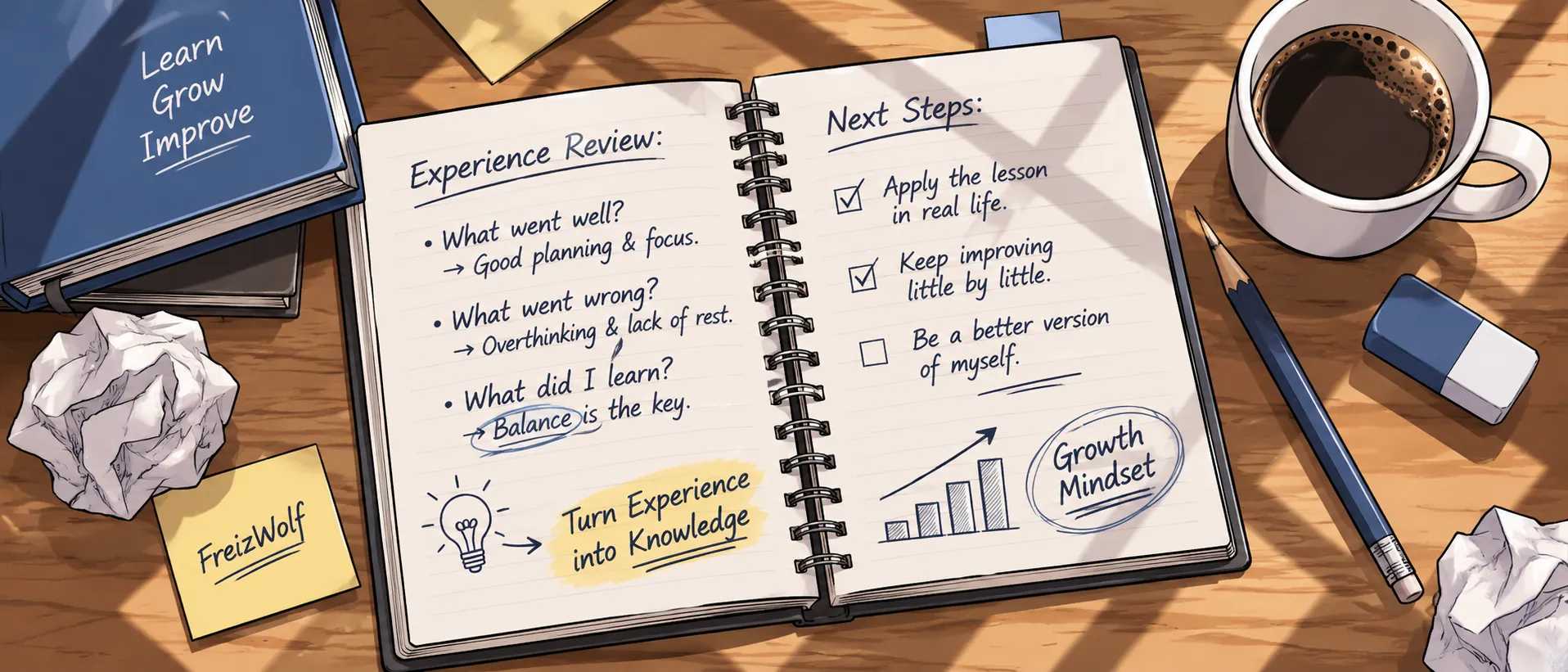
Some mistakes are small enough to forget. Others stay in your mind because you keep thinking about what could have happened if you had made a different decision. But regardless of their impact, mistakes do not have to become permanent proof that you are incapable of doing better.
The real difference lies in what you do after something goes wrong. You can spend your time blaming yourself, or you can examine the decision that led you there. One keeps you trapped in regret. The other gives you information you can use next time.
Understand What Actually Went Wrong
Learning from mistakes requires more than admitting that something went wrong. It requires understanding why it happened.
Think about a business idea that failed. Was the problem poor planning, a lack of market research, or a decision made too quickly? Perhaps the idea itself was reasonable, but the timing or execution was wrong.
The same approach applies to personal decisions. A financial loss might reveal that you acted without enough information. A damaged relationship might show that you ignored a problem for too long. Instead of treating every outcome as one big failure, break it down and identify the part you could have handled differently.
A Different Perspective
A mistake becomes useful when you stop asking only what you lost and start examining what it revealed.
Turn the Lesson Into a Better Decision
Understanding a mistake means little if you repeat the same behavior. The next step is to turn what you have learned into a practical change.
Before making a similar decision, ask yourself what information was missing last time. Consider which warning signs you overlooked and what you would do differently if the same situation happened again.
A simple way to review a mistake:
Identify the decision or action that caused the problem.
Separate what you could control from what you could not.
Find the lesson that can prevent the same problem.
Apply that lesson when making your next decision.
You also need to accept that some consequences cannot be reversed. You may not recover the money, opportunity, or time you lost. Learning from the experience does not mean pretending the damage never happened. It means refusing to let that damage determine every decision that follows.
Do Not Turn One Failure Into Your Identity
There is a difference between saying, “I made a bad decision,” and believing, “I am someone who always makes bad decisions.” The first describes an event. The second turns that event into an identity.
Taking responsibility is important, but punishing yourself indefinitely does not improve your judgment. You can admit that you were wrong without treating yourself as someone who is incapable of changing.
Growth often happens through repeated adjustments. You make a decision, see the result, recognize what needs to change, and approach the next situation with better awareness. Progress does not require you to become someone who never makes mistakes. It requires you to become someone who learns from them.
Final Reflection
Your past decisions can explain where you are today, but they do not have to decide what you do next.
The next time something goes wrong, give yourself enough space to understand it. Do not rush to hide the mistake, and do not waste your energy pretending it never happened. Look at the facts, take responsibility for your part, and carry the lesson forward.
If you want to keep learning and developing your perspective, explore the collection of quality eBooks at affordable prices on lynk.id/freizwolf.
Silence within Freedom